.png)
Artistic portrait: Casey (EN, FR)
ARTISTIC PORTRAIT: CASEY, THE HISTORY OF SLAVERY IN CASEY‘S MUSIC
Mylène
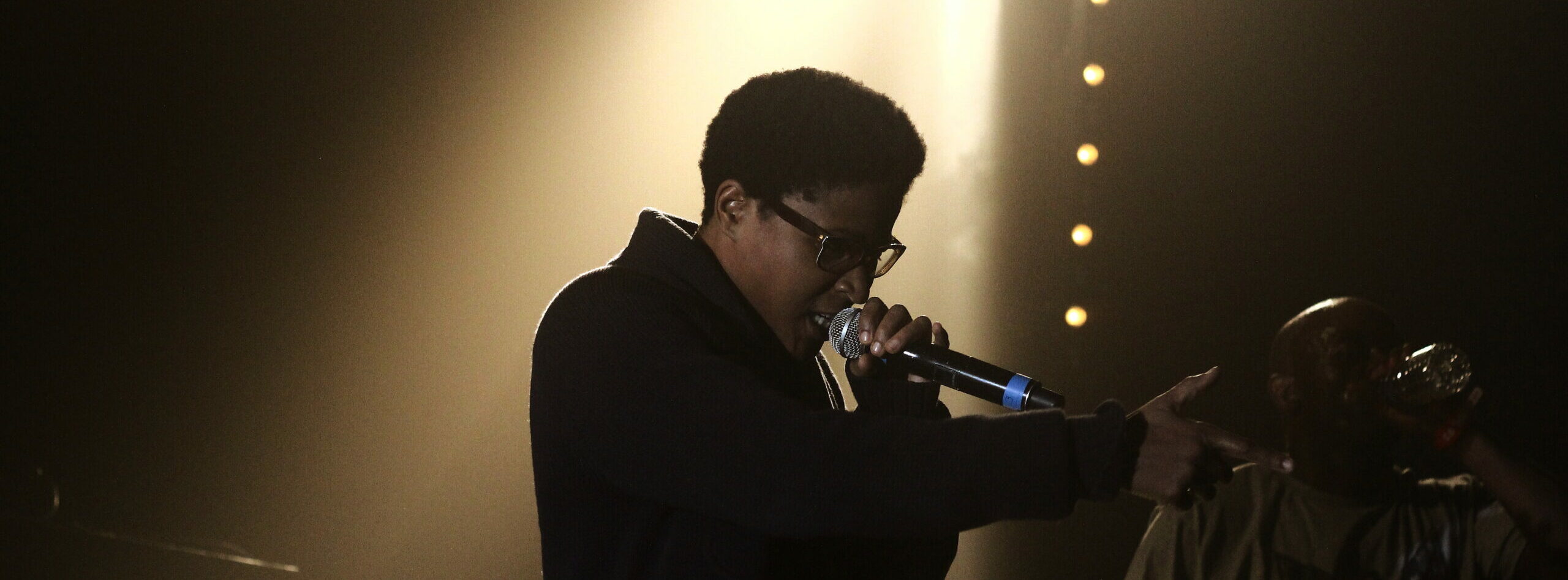
For several years, the hip-hop scene in France has witnessed several rap artists who have addressed the history of slavery and its repercussions. Amongst them, the artist Casey, renowned for her frank and acerbic pen. Her music draws on multiple historical references, expressed through the lyrics, the musical arrangement, and the accompanying video clips.
The history of slavery in Casey’s music
In her two solo albums released in 2006 and 2010, but also in the album with the hybrid-rock collective Ausgang, there are distinct references to the history of the transatlantic slave trade and colonial slavery. Casey explores these references through the evocation of her Caribbean roots. Martiniquaise, but born in mainland France, this “anomaly of the 93* with a Caribbean mouth”—an excerpt from the song , 2020 (A Parte)—explores Martinique’s colonial past from her very first solo album, particularly in the album (Tragedy of a trajectory), featuring the eponymously-titled track, as well as (My home). A similar strong evocation can be found in her second solo album (Unleash the beast), with the song (Bag of sugar), (2006, Anfalsh). This tells of the different stages of the slave trade and enslavement, including purchasing (“I was pursued, enslaved, kidnapped from Africa and delivered”), and forced labour (“in the morning when I get up, I perform my chores”) in order to produce consumable economic foodstuffs, like cocoa and sugar.
By personifying the day of an enslaved person, accompanied by the slow rhythm of the melody, Casey describes the physical and psychological pain of forced labour on slave plantations, while also evoking acts of resistance: the character depicted in the song gradually rebels as the song progresses.
The title (Bag of sugar) can be interpreted in two ways: both as the story of a day of an enslaved person in the French West Indies and as an analysis of the current situation on the island. References to the past mingle with the present social situation, reflected in the lexical field used by the artist.
*93: a disadvantaged suburb of Paris
“Descendants of those vicious slave-trading cruises” <...> “Our former torturers are our new employers / With little pride returning to yesterday’s plantation”.
Sac de Sucre, Libérez La Bête, Casey (2010, A-parte)

The history of slavery in images
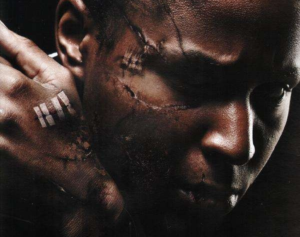
The history of the transatlantic slave trade also appears in Casey’s videos. In (Failed creature) from the album , track 3 (2010, A-parte), Casey uses the same process as in but here changes the focus and instead tells the story from the settler’s point of view. Adding to her exploration of the history of slavery, Casey questions the perception of the body of the black slave.
Casey (2010, A-parte)
In the same track, she refers to deportation and slavery, while evoking “the civilizing mission” that was one of the main arguments in the 15th and 16th centuries serving to inaugurate the process of colonization and extra-European conquests.
Casey (2010, A-parte)
https://www.youtube.com/watch?v=Fa7nN1YXQv0
In this video, directed by Chris Macari, the representation of the body is given centre stage. We see multiple, anonymous bodies, twisting and turning, in imitation of archetypical poses from a ritual often practised by enslaved people.
In order to approach the body and the violence of the slave system, the director repeatedly shows a photograph of the lacerated back of African American slave Gordon (at 0.41 sec in (Failed creature) and at 1.37 in (My home)). This photograph was frequently used by abolitionists to show the reality of the violence of colonial slavery
https://www.youtube.com/watch?v=B14HhFLZCw4
The history of slavery through her own personal story
Casey continues to tell this story through a more personal, even intimate discourse, evoking the consequences of this historical period on the Caribbean diaspora. Visually, this idea is embodied in the video for the track entitled (My home), directed once again by Chris Macari and shot in Martinique. In the introduction, scenes from everyday life on the island alternate with more personal images showing Casey in conversation with her grandmother and speaking in Martinican Creole. In addition to this highly personal echo of a little Martinican girl, Casey voluntarily positions herself in a geographical space marked by the history of slavery in Martinique. She is filmed at some important sites, including the Cap 110 Memorial at Anse Cafard located to the south of the island, which commemorates the shipwreck of a slaver off the island’s coast. Furthermore, Casey encourages listeners to move away from the saccharine images of the French West Indies, preferring instead to evoke the French West Indian cultural heritage by means of references to the politically-engaged psychiatrist Frantz Fanon, writer Aimé Césaire, and barefoot singer, Eugène Mona (“Do you know Frantz Fanon, Aimé Césaire / Eugène Mona, and Ti Emile?”).
Exploring history through the influence of French West Indian music
All these references also exist in her choice of musical arrangements. In her songs, Casey uses traditional music from the French West Indies, born during the period of slavery, known as gwo ka and bélé. These can be found for example in the introduction to the track (Bag of sugar) and the conclusion to (Failed creature). A bridge to an artistic practice with a strong socio-political conscience that she pursues through the ExpéKa Trio project, presented on stage with flautist Celia Wa and drummer Sonny Troupé.
Audio extract Aparté - Casey:
More recently, Casey has developed projects combining rock and rap, like Ausgang (with Sonny Troupé, Marc Sens, and Manusound). These projects evoke the essence of musical traditions which have, in part, the American continent and the history of slavery as their cradle.
.
Discography
🔶2006, Tragédie d’une trajectoire (Anfalsh/Dooen Damage/Aparte) - Tragédie d’une trajectoire - Chez Moi 🔶2010, Libérez la Bête (Ladilafé/Aparté/Anfalsh) - Regard Glacé - Créature ratée - Sac de sucre 🔶2020, with Ausgang - Gangrene (Aparté) - Chuck Berry
Further information
🔶 Portrait and interview with the artist, ARTE “28 MINUTES”, France, 2021. Watch online:

Table of Contents
About the author
Mylène is a music journalist and radio producer behind programmes and sound documentaries. She addresses the history of music and occasionally musical hybridity. She is also a young researcher in History.
Bibliography
Myriam Cottias, Elisabeth Cunin and António de Almeida Mendes (ed.) . Paris: Karthala, 2010, p. 396.
SEE MORE